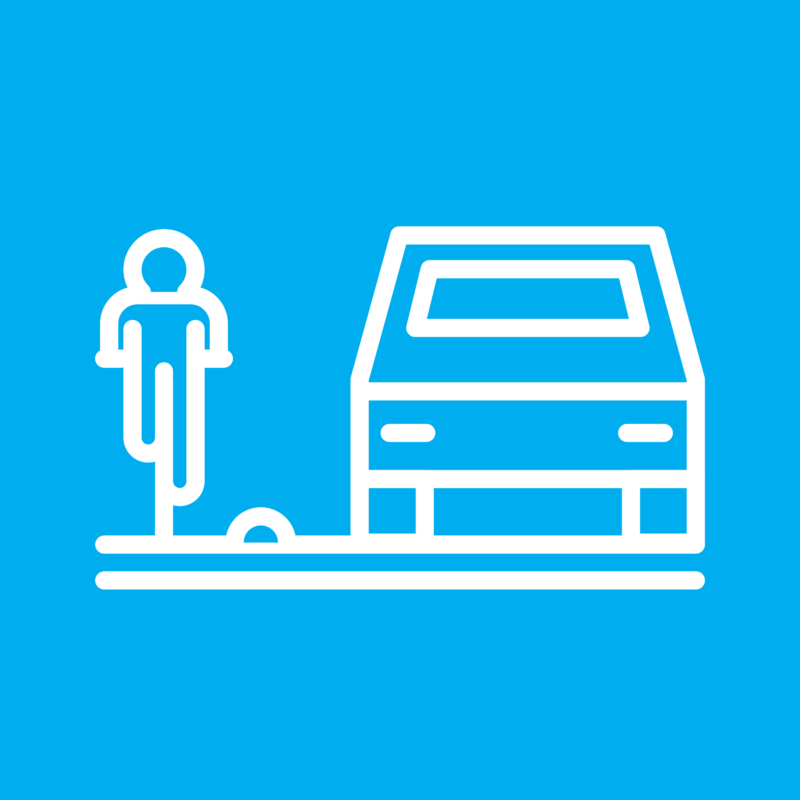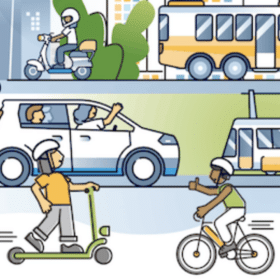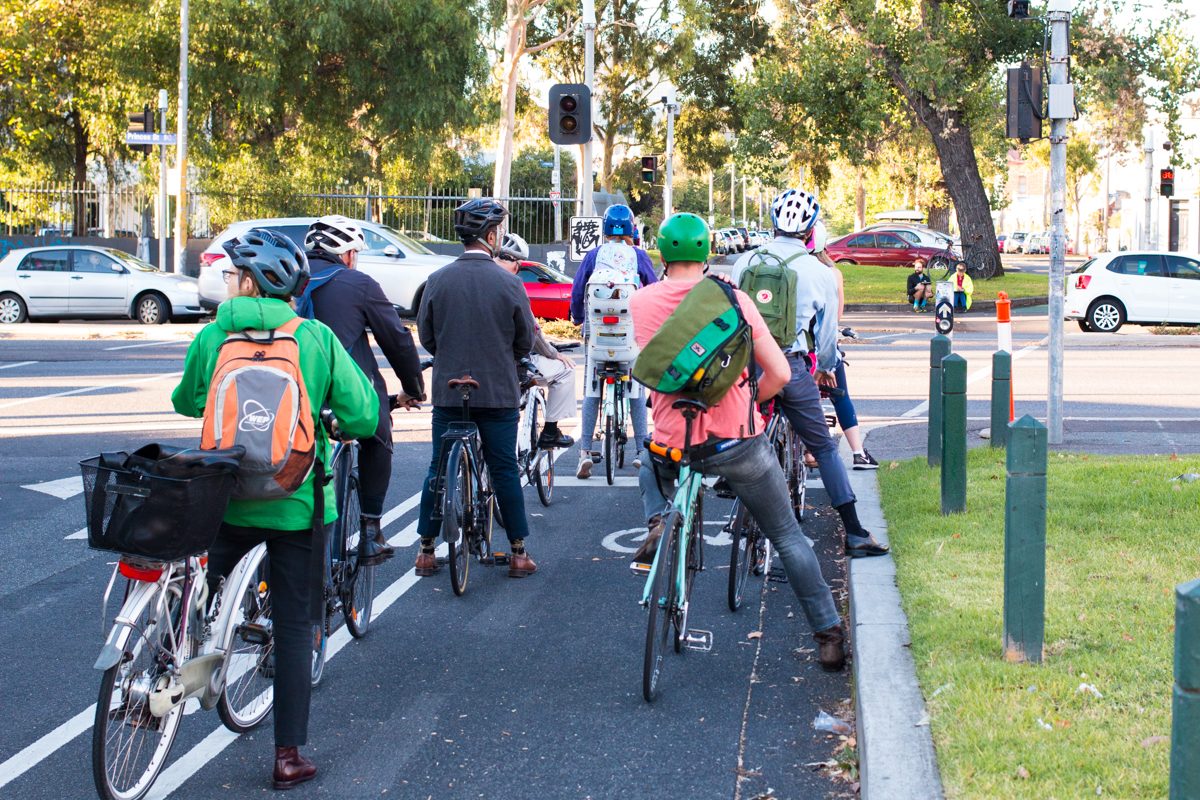


Bicycles can overtake to the left of a vehicle unless:
A cyclist must give way to a vehicle that is signalling to turn left and driving in front of the cyclist.
No.This rule means cyclists are not permitted to ride across a road on a pedestrian crossing, children's crossing, or marked foot crossing. This includes pedestrian crossings situated at traffic lights.
Cyclists should dismount and wheel their cycles across the crossing.
It is legal to cycle on the footpath in Tasmania, unless signed otherwise. These signs are usually in high pedestrian areas such as Hobart CBD and forbid cycling on the footpath at certain times of certain days of the week. These restrictions are usually daytime hours during weekdays. The situation in other States varies, some allowing adults to ride on the footpath only if accompanying a child under 12.
However Bicycle Tasmania recommends that, as legally a bicycle is a vehicle under the Traffic Act that cycling on footpaths be kept to a minimum and as a cyclist you act assertively and confidently on the road as you would operating any other vehicle. For more information on the Vehicular Cycling there will soon be a Vehicular Cycling PowerPoint presentation (contact Wayne Kelly). It is also worth reading 'Cyclecraft - Skilled Cycling Techniques For Adult' by John Franklin, which is available in the State Library. CyclingSouth run an Intermediate Adult Rider Course teaching these skills, contact Rowan Burns.
Cyclists are required to use a properly marked and gazetted on-road cycle lane where it is going in their direction, unless it is impracticable to do so, but there is no compulsion within the law that mandates they use of an off-road or footpath cycle path even where it runs adjacent to the road.
When riding on a footpath or shared path, the rider of a bicycle must keep to the left and must give way to any pedestrian on the path.
Cyclists must not ride on a footpath where there is a "No bicycles" sign.
Local laws provided by Councils may override the above regulation.
A bicycle rider is prohibited from towing a person in a bicycle trailer unless:
Australian Road Rules 15 What is a vehicle A vehicle includes: (a) a motor vehicle, trailer and tram; and (b) a bicycle; and (c) an animal-drawn vehicle, and an animal that is being ridden or drawing a vehicle; and (d) a combination; and (e) a motorised wheelchair that can travel at over 10 kilometres per hour (on level ground); but does not include another kind of wheelchair, a train, or a wheeled recreational device or wheeled toy. Part 11 Keeping left, overtaking and other driving rules Division 1 General 125 Unreasonably obstructing drivers or pedestrians (1) A driver must not unreasonably obstruct the path of another driver or a pedestrian. Note :Driver includes a person in control of a vehicle (2) For this rule, a driver does not unreasonably obstruct the path of another driver or a pedestrian only because: (a) the driver is stopped in traffic; or (b) the driver is driving more slowly than other vehicles (unless the driver is driving abnormally slowly in the circumstances). Example of a driver driving abnormally slowly A driver driving at a speed of 20 kilometres per hour on a length of road to which a speed-limit of 80 kilometres per hour applies when there is no reason for the driver to drive at that speed on the length of road. Australian Road Rules 151 Division 2 Keeping to the left 129 Keeping to the far left side of a road (1) A driver on a road (except a multi-lane road or a road with 2 or more lines of traffic travelling in the same direction as the driver) must drive as near as practicable to the far left side of the road. (Note the rule says "as near as practicable" not "as near as possible" and applies equally to motor vehicles and bicycles (though motor cycles are noted as a special exception). Cars don't drive with a wheel in the gutter or within inches of parked cars and bicycles are not expected to either. Most experts who advise on cycling tactics interpret this to mean that you are entitled to "take the lane" whenever you judge it to be the safest course of action for you . For example when avoiding "the door zone" near parked cars, when positioning yourself to turn right, or when riding in heavy traffic who might otherwise try to squeeze past you unsafely.) There are plenty of other rules which may have applied so if he really wants to a police officer can always find something to charge you with and the courts will always be sympathetic to his view in the first instance. Hence our advice is to bite your tongue and follow his directions if reasonably possible. Other rules which may be stretched to apply could be, for example: 253 Bicycle riders not to cause a traffic hazard The rider of a bicycle must not cause a traffic hazard by moving into the path of a driver or pedestrian. Offence provision. 255 Riding too close to the rear of a motor vehicle The rider of a bicycle must not ride within 2 metres of the rear of a moving motor vehicle continuously for more than 200 metres.
![]() |
On patrol to find ways of making life better for ALL cyclists.
Send all general enquiries to secretary.biketas@gmail.com. This and related page(s) have been viewed times Read our General Disclaimer. |